Meditation and the Chakras

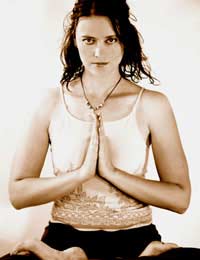
Chakras are specific energy points that run from the base of the spine to the top of the forehead, the belief in which originally issues from Hindu tradition, although there is now a wide following of chakra systems of thought amongst new age spiritualists. Each chakra is thought to draw in certain forms of energy and the smooth flow of energy across all chakras is thought to be fundamental to overall spiritual wellbeing.
Each chakra relates to a specific form of energy (or ‘prana’) and focus on specific chakras can help to heal spiritual, mental or physical ailments. The belief in chakras is wide spread and crosses over many different spiritual practices, resulting in differences across belief systems. Whilst some people believe that there are 5 chakras, others believe that there are either 7 or 8 of them. However, the fundamental understanding, that a form of energy emanating from the creation of the Universe itself lays dormant at the base of the spine until it is unleashed and rises like an uncoiled serpent, invigorating the chakras and bringing the individual to a greatly heightened state of awareness. This energy is called ‘Kundalini’ and it is the unravelling of the Kundalini serpent that is the main aim of many Yogic practices. Similar practices occur in Sufism, Hesychasm and Jewish mysticism, whilst the symbol of the serpent is recurrent through many religious belief systems in both positive and negative forms.
The Chakras
Many systems work around 7 basic chakras and these are the most commonly referenced by New Age spiritualists and ‘chakra healers’ as well as Hindus:- The Crown Chakra (Sahasrara): The main consciousness chakra through which spiritual enlightenment may be channelled. Location: Top of the head. Violet.
- The Third Eye (Ajna): The chakra associated with intuition: Location: In the middle of the forehead. Indigo.
- Throat Chakra (Vishuddah): Most associated with communication and one’s relationship with the world and with communication with yourself. Location: Front of the throat. Blue.
- Heart Chakra (Anahata): The chakra through which compassion and love is felt. The healthy functioning of this chakra is said to be essential to the smooth flow of energy to the previous three chakras. Location: At the centre of the chest. Green.
- Solar Plexus (Manipura): Associated with digestion and also governs, wisdom, resolve and strength of personality. Location: Just below and to the left of the heart chakra. Yellow.
- Sacral Chakra (Swadhisthana): Associated with primordial urges and sexual desire. Location: Between the navel and the sexual organs. Orange.
- Base Chakra (Muladhara): The chakra through which energy enters our body. This chakra absorbs the influence of our environment and will affect our general wellbeing. Location: At the base of the spine. Red.
Chakra Meditation
The aim of chakra meditation is to enliven and invigorate the chakras and the flow of energy between them. By so doing one can increase both their physical and spiritual wellbeing.Taking a seated position with your weight evenly balanced, simply clear your mind and focus on each of the chakras in order, starting with the base chakra and rising through to the Crown chakra, feeling each point glowing (in the colour associated with that chakra) and emanating energy related to the particular properties of that chakra. It is believed that by doing this you can come to a better balance within yourself. It must be noted that an awakening of Kundalini is a very intense experience for which serious preparation is needed. The lay person’s practice of chakra meditation should be conducted merely with the intention of coming to a better understanding of the self. In order to reach a state of union with God, or a state of spiritual Enlightenment, a more rigid practice such as Kundalini yoga, under the tutelage of an experienced practitioner, is advised.
From a Western point of view, the chakras relate closely in location to specific organs and glands, all of which have an effect on our physical and mental wellbeing. For example, the ‘Crown’ and ‘Third Eye’ chakras relate to the pituitary and pineal glands, whilst the heart chakra relates directly to the heart. For this reason, a positive focus on these regions may well have a strong effect on one's health regardless of spiritual belief.
- Top 10 Meditation Mistakes That People Make
- All About Chakra
- Wiccan Meditation
- Shamanistic Meditation
- Space Clearing Meditation
- Tonglen Meditation
- Sensual Meditation
- Lectio Divina Meditation Explained
- Shambala Training Explained
- All About Taoism and Taoist Meditation
- Judaism
- Meditation & Hinduism
- Meditation & The Bahai Faith
- New Age
- Sikhism
- The Use of Symbols in Meditation
- Jainism
- Gnostic Meditation
- Islamic Meditation
- Christianity
- Buddhism

Re: All About Taoism and Taoist Meditation
(palimpsests). In the XIII-XV centuries in
Re: Can I Go Back to Sleep After Morning Meditation?
Can I sleep after meditation in the brahm muhurat. Is it OK to sleep or should I keep awake.
Re: Can I Go Back to Sleep After Morning Meditation?
After 30 minutes meditation I obviously getting sleepy. How to avoid please suggest.
Re: Can I Go Back to Sleep After Morning Meditation?
Is it advisable if individual is going for sleep after morning meditation.Self is trying to avoid…
Re: Microcosmic Orbit Meditation
HII..I want to practice microcosmic orbit meditation. I am a reiki level 2 healer so i do reiki selfhealing daily but i want to do…
Re: Body Scan Meditation
Having practiced other mindful meditations I feel this is the easiest for me & does keep me feeling more relaxed day to day. I try to…
Re: Keeping a Meditation Journal
@Skiprat. Take a look around this site to discover the various forms of meditation.
Re: Keeping a Meditation Journal
I'm taking part in meditation 'classes' from the Brahma Koumaris network of teachers & I'm unsure whether its the best way to…
Re: Basic Breathing Meditation
I have been meditating for nearly 6 months, most days, 20 minutes each session. I always concentrate on my breathing, sometimes I use…
Re: How Long Should I Meditate for?
While meditating for 40 minutes at a time, twice a day, sounds ideal, for most people it's simply not practical. However,…